
A Fusion of Splendid Quality and the Pinnacle of Fire-based Art: An Examination of the Artistic Achievements, Craftsmanship History, and Contemporary Collecting of Qing Dynasty Imperial Painted Enamel on Glass
John Yee, Ph.D., H. C. Yee, Ph.D., H. P. Yee, Ph.D., Phylina Yee, MD., Derek Yee, MD., Bolina Long, MS.
Seattle Oriental Art Collection
Abstract: Glass-body painted enamel (commonly known as Liaotai Hua Falang) represents a distinct and highly prestigious imperial polychrome craft unique to the Qing court. It harmoniously integrates Western-introduced enamel pigments and glass-making techniques with traditional Chinese pictorial arts. This paper explores the ultimate craftsmanship limitations of glass-body painted enamel by analyzing the pivotal technological breakthroughs during the Kangxi, Yongzheng, and Qianlong reigns, specifically the successful development of opaque white glass (Niebai) and the localization of self-refined enamel pigments (Zilian Falangliao). Furthermore, it provides empirical evidence of the value of these artifacts through a comprehensive statistical overview of extant global museum collections and recent record-breaking auction data. Finally, this study conducts a meticulous aesthetic and epigraphic analysis of a unique, unprecedented pair of imperial glass-body painted enamel brush pots from the Seattle Oriental Art Collection. By evaluating their adherence to the imperial paradigm of integrating poetry, calligraphy, painting, and seals, this paper demonstrates the stylistic continuity and unique vitality of this consummate imperial art form within the realm of scholarly studio implements.
ريڠكسن: ايناميل يڠ دچت دڠن بادن كاچ ﴿بياساڽ دكنلي سباڬاي لياوتاي هوا فالڠ﴾ مواكيلي كراجينن ڤوليكروم ايمڤاير يڠ ترسنديري دان برڤريستيج تيڠڬي يڠ اونيك كڤد ايستان چيڠ. اي مڠينتڬراسيكن سچارا هرمونيس ڤيڬمن ايناميل يڠ دڤركنلكن اوليه بارت دان تيكنيك ڤمبواتن كاچ دڠن سني برڬمبر تراديسيونال چينا. كرتس اين منرڠكن كترباتسن ككراسن اخير ايناميل يڠ دچت دڠن بادن كاچ دڠن مڠاناليسيس كچمرلڠن تيكنولوڬي ڤنتيڠ سماس ڤمرينتاهن كڠسي، يوڠزيڠ، دان چيانلوڠ، خصوصڽ ڤركمبڠن برجاي كاچ ڤوتيه يڠ تيدق جلس ﴿نيباي﴾ دان لوكاليساسي ڤيڬمن ايناميل يڠ دڤروسيس سنديري ﴿زيليان فالاڠ﴾. ستروسڽ، اي ممبريكن بوقتي امڤيريس تنتڠ نيلاي ارتيفك-ارتيفك اين ملالوءي ڬمبارن ستاتيستيک يڠ كومڤريهنسيف تنتڠ كوليكسي موزيوم ڬلوبال يڠ ماسيه اد دان داتا ليلوڠن يڠ ممچهكن ريكود بارو-بارو اين. اخيرڽ، كاجين اين منجالنكن اناليسيس ايستيتيكا دان ايڤيڬرافي يڠ تليتي ترهادڤ سڤاسڠ ڤريوق برس ايناميل يڠ دچت دڠن بادن كاچ ايمڤيريال يڠ اونيك دان تيدق ڤرنه برلاكو سبلومڽ دري كوليكسي سني اوريانتل سياتل. دڠن منيلاي ڤاتوهن مريك كڤد ڤاراديڬما ايمڤيريال مڠينتڬراسيكن ڤويسي، خط، لوكيسن، دان موتيف، كرتس اين منونجوقكن كسينمبوڠن ڬاي دان ۏيتاليتس اونيك بنتوق سني ايمڤيريال يڠ كونسومتيف اين دالم بيدڠ ڤلقسانأن ستوديو علميه.
I. Introduction: An Exceptional Category of Qing Imperial EnamelwareFollowing its introduction to China in the 17th century, the art of painted enamel rapidly garnered the favor of Qing emperors. Under the auspices of the Imperial Workshops, painted enamel flourished across a diverse range of substrates, including porcelain, copper, and Yixing stoneware. Among these various categories, however, painted enamel on a glass body—often referred to as *liaotai* (glass-body) painted enamel—stands out as the rarest. Large-scale imperial glass-body painted enamel pieces are exceedingly scarce among extant works; this rarity makes them an exceptional lens through which to examine the pinnacle of Qing imperial craftsmanship and aesthetic sensibilities.II. Historical Background and Breakthroughs in Core Material TechnologyThe emergence and flourishing of painted enamels on glass bodies did not result from the isolated development of a single craft; rather, it was the product of deep, cross-departmental collaboration between the Glass Workshop and the Enamel Workshop under the Imperial Household Department’s Workshops. Two key breakthroughs in material technology laid the foundation for this craft:1. The successful development of “opaque white glass” during the Kangxi reignFor painted enamels on glass to achieve the lustrous, warm quality of porcelain and the nuanced depth of traditional painting and calligraphy, a specific type of opaque, milky-white glass—known as *niebai* (opaque white) glass—was essential.In the 35th year of the Kangxi reign (1696), the Qing court established a glass workshop. Through the joint efforts of Western missionaries and artisans from Boshan, Shandong, they successfully produced an opaque white glass characterized by a fine, dense texture and a warm, jade-like luster. This material combined the rich, creamy quality of jade with the inherent properties of glass, providing an ideal “canvas” for the adhesion and vibrant coloration of enamel pigments.2. The Revolution of Localized Enamel Production During the Yongzheng ReignEarly painted enamel glazes relied heavily on European imports and offered a limited color palette. In the sixth year of the Yongzheng reign (1728), the Emperor ordered the domestic production of enamel materials. Prince Yi (Yinxiang) and the artisans of the Imperial Workshops overcame numerous challenges to not only successfully replicate imported pigments but also independently develop nine new types of domestic colors, including soft white, pale blue-green, coral red, and rose purple. The success of this domestic production expanded the controllable color range to over twenty varieties, vastly enriching the expressive potential of the imagery and making delicate color gradations and rich contrasts of light and shade achievable on the enamel surface. III. Technical Limits: A Delicate Balancing Act of Fire and TemperatureThe reason enamel-on-glass is often described as an art form where “all previous efforts can come to nothing” lies in the fact that its firing process pushes the boundaries of physical limits:The Paradox of Melting Points: The glass body and the enamel glaze share similar chemical compositions, resulting in melting points that are extremely close. If the temperature is too low, the enamel fails to melt fully, leading to dull colors; if the temperature is too high, the glass body reaches its softening point, causing the entire piece to collapse or deform.The Cumulative Risk of Sequential Firing: Because pigments with different chemical compositions have varying melting points, artisans must adhere to a strict firing sequence—proceeding from the highest melting point to the lowest. A finished piece often requires three to four separate firing sessions. Each firing represents a high-stakes gamble with the work already accomplished; a single instance of temperature control failure renders the entire piece a total loss. IV. Current Distribution of Extant Glass-Bodied Painted Enamels from the Kangxi, Yongzheng, and Qianlong ReignsDue to the complexity of the craftsmanship and the immense difficulty of firing—resulting in a very low success rate—extant examples of imperial glass-bodied painted enamels from the Kangxi, Yongzheng, and Qianlong reigns are exceedingly rare. They are primarily housed in a select few top-tier museums and private collections worldwide. Based on incomplete data, the distribution of known core public holdings and renowned private collections is as follows:• The Palace Museum, Beijing: 2 pieces• National Palace Museum, Taipei: 7 pieces• Percival David Foundation: 8 pieces (currently on permanent display in Gallery 95 at the British Museum)• Hong Kong Museum of Art: 1 piece• The Corning Museum of Glass, USA: 2 pieces• Museum in The Hague, Netherlands: 1 piece (a renowned extant example from the Kangxi reign)• Private collection, Hong Kong (Mr. Li): 1 pieceThe data above reveals that holdings of glass-bodied painted enamels in top-tier public institutions—both domestic and international—often number only in the single digits. This underscores the exceptional rarity of this imperial craft and provides an invaluable comparative framework for research by private collectors and institutions.
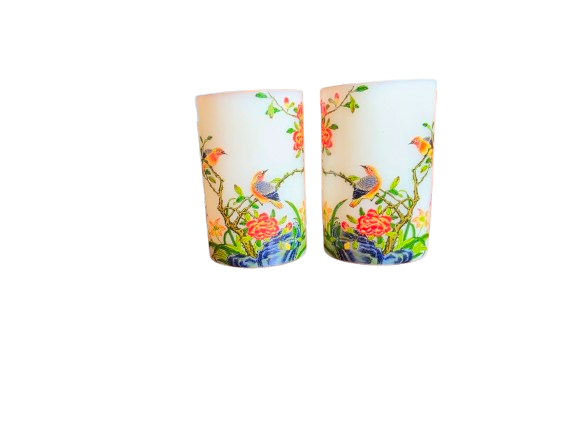
V. Contemporary Market Value and Record-Breaking Auction ResultsIn the contemporary international art auction market, imperial glass-bodied painted enamel wares—prized for their extreme rarity and inimitable craftsmanship—consistently command an exalted, unshakable status and fetch astronomical prices.A landmark event in this regard was the Sotheby’s Hong Kong Autumn Sale in 2019. During the dedicated auction for ceramics and works of art, a “Qing Qianlong Yellow-Ground Glass-Body Painted Enamel ‘Wrapping Cloth’ Vase with Phoenix and Peony Design” (from the Le Cong Tang Collection)—a piece that had garnered immense global attention—was offered for sale. The vase achieved a hammer price of HK$180 million and a final price of HK$207 million (approximately US$24 million) including the buyer’s premium, thereby setting a new world record for the most expensive glass object ever sold. Notably, the vase boasts a distinguished provenance linked to renowned international collectors such as A.W. Bahr and the couple Paul and Helen Bernat, further underscoring the immense value of such top-tier, historically significant masterpieces.Furthermore, the appearance of such large-scale scholar’s objects on the market is exceedingly rare. A prominent auction house once held a rare sale featuring two Qianlong glass-body painted enamel brush pots; these lots caused a sensation within the collecting community, further demonstrating the exceptional artistic value and market recognition enjoyed by glass-body painted enamel wares in the realm of high-end scholar’s studio furnishings and objets d’art. VI. Analysis of an Actual Artifact: A Pair of Enamelled Glass Brush Pots1. Characteristics of Form and MaterialThis pair of enamelled glass brush pots is part of the collection held by the Seattle Oriental Art Collection. A meticulous comparison with known domestic and international literature, public and private collections, and auction records from recent years reveals that this pair is unique worldwide; no other objects sharing the same subject matter and form have been documented in or are held by any public museum or private collection.In terms of form, the brush pots exhibit exceptional symmetry and precision. The body is crafted from the opaque white glass typical of imperial court wares; the material is pure and possesses a lustrous, creamy whiteness, with a translucency that perfectly mimics the warm, smooth texture of fine white jade. Although these brush pots are significantly larger than the common snuff bottle—another form often executed in this material—they maintained their structural integrity without any deformation of the rim or walls during high-temperature firing, a testament to the artisans’ consummate technical mastery in temperature control.2. Artistic Style and CompositionThis pair of brush pots ingeniously incorporates the aesthetic spirit of traditional Chinese literati painting, seamlessly blending pictorial art, poetry, and seal carving to embody the refined taste of the literati.Floral and Bird Imagery on the Front: The composition features gnarled, vigorous branches outlined with delicate strokes, adorned with blossoms in full red bloom. The petals are rendered through multiple layers of enamel shading—varying in intensity—creating rich hues and a striking sense of three-dimensional depth. Perched upon the branches and the grassy ground are small birds, exquisitely colored and full of spirited charm; they interact harmoniously with the Taihu rock and elegant orchids, creating a lively, dynamic composition that captures the vibrant beauty of nature.
)
【Fig 1:The front of glass】
Integration of Calligraphy, Painting, and Imperial Inscription Standards: The reverse side of the brush pot features a fluid ink inscription of a five-character verse: “New branches hold a pale green hue; dawn dreams scatter a soft crimson.” The calligraphy is elegant, neat, and vigorous. Research indicates that this verse follows the classic paradigm for imperial painting inscriptions established by the Qing Dynasty Imperial Workshops during the Yongzheng reign (such as the inscription “New branches hold a pale green hue; dawn calyxes scatter a soft crimson” found on the *Famille-rose* porcelain bowl featuring pomegranates and orioles, held in the collection of the National Palace Museum, Taipei).Furthermore, the verse is flanked by vermilion enamel “lead-in seals” and “signature seals,” perfectly aligning with the imperial standards for *famille-rose* wares that integrate the “four arts”—poetry, calligraphy, painting, and seal carving—into a unified composition. These seals typically comprise auspicious or poetic phrases used exclusively by the Imperial Workshops—such as “Jiali” (Beauty), “Jincheng” (Golden Success), and “Xuying” (Radiant Glow)—thereby imbuing the object with a distinct sense of imperial artistic convention and historical gravitas.
【Fig 2:The back of glass】
Characteristics of the mark on the base: The base of the brush pot typically serves as the primary evidence for determining the object’s date of manufacture and its status as an imperial commission. It usually bears a double-framed mark in blue enamel—distinctive to the Imperial Workshops—with calligraphy and craftsmanship that align perfectly with standard palace wares, constituting indispensable physical evidence for assessing its scholarly significance.
【Fig 3:The bottom of glass】
3. ConclusionThis pair of enameled glass brush pots represents a successful fusion of an enameling craft originally characterized by strong Western influences with the freehand calligraphic and pictorial styles of the Chinese literati. As the only known surviving example of its kind in the world, the piece not only overcomes the formidable technical challenges involved in the repeated firing of opaque white glass bodies but also transcends the ostentatious opulence typical of the imperial court, embracing instead the refined elegance and spirited grace prized in scholarly studio objects. The discovery of this set not only fills a historical gap in global museum collections regarding this specific category and subject matter but also stands as a rare, inimitable, and supreme physical testament to the evolution and heritage of glass-bodied painted enamel art.
- كسيمڤولن
ڤاسڠن ڤريوق بروس كاچ ايناميل اين مواكيلي ڤڠڬابوڠن يڠ برجاي دري كراجينن ايناميل يڠ ڤد اصلڽ دچيريكن اوليه ڤڠاروه بارت يڠ كوات دڠن ڬاي كاليڬرافي دان برڬمبر تاڠن بيبس ڤنوليس چينا. سباڬاي ساتو-ساتوڽ چونتوه يڠ ماسيه هيدوڤ يڠ دكنلي دري جنيسڽ د دنيا، كاريا اين بوكن سهاج مڠاتسي چابرن تيكنيكل يڠ هيبت يڠ ترليبت دالم ڤمبونوهن برولڠ كالي بادن كاچ ڤوتيه يڠ تيدق جلس تتاڤي جوڬ ملمڤاوءي كميواهن يڠ ڤنوه ڤنوه يڠ بياسا د محكمه ايمڤاير، مڠمبيل سباليقڽ كأڬوڠن يڠ هالوس دان نعمت يڠ برسماڠت يڠ دڤرلوكن دالم أوبجيك ستوديو علميه. ڤنموان سيت اين بوكن سهاج ممنوهي جورڠ سجاره دالم كوليكسي موزيوم ڬلوبال بركاءيتن كاتڬوري دان سوبجيك ترتنتو اين تتاڤي جوڬ برديري سباڬاي وصية فيزيكل يڠ جارڠ، تيدق داڤت دتيرو، دان ترتيڠڬي كڤد ايۏولوسي دان واريثن سني ايناميل يڠ دلوكيس بربنتوق كاچ.
3
References:1. The Palace Museum (Ed.). *Illustrated Catalogue of Enamels in the Palace Museum*. The Forbidden City Publishing House.2. Guan Xueling. *A Study of Qing Dynasty Imperial Glassware*. The Forbidden City Publishing House.3. Sotheby’s. *A Phoenix Descends: The Le Cong Tang Collection—Qianlong Glass-Bodied Painted Enamel ‘Wrapping Cloth’ Vase*. 2019.